

Moving to Russia is exciting, but the first 90 days can feel like a strange mix of discovery, paperwork, adjustment, and small victories. One day you are walking through a beautiful city center, enjoying clean public transport, serious cafés, wide streets, and a sense of order. The next day you are trying to understand why one document requires another document that requires a phone number that requires another document.
That is not a reason to be discouraged. It is simply part of the process.
Russia is a highly organized country, but it is not always self-explanatory to newcomers. For Westerners, especially Americans, Canadians, British citizens, Australians, and Europeans used to different systems, the first 90 days are usually less about “culture shock” in the dramatic sense and more about learning how Russia actually works: migration rules, registration, mobile phone access, banking, apartment paperwork, medical requirements, and everyday Russian routines.
This guide gives an honest, practical overview of what to expect.
1. Arrival: Your Migration Card Matters Immediately
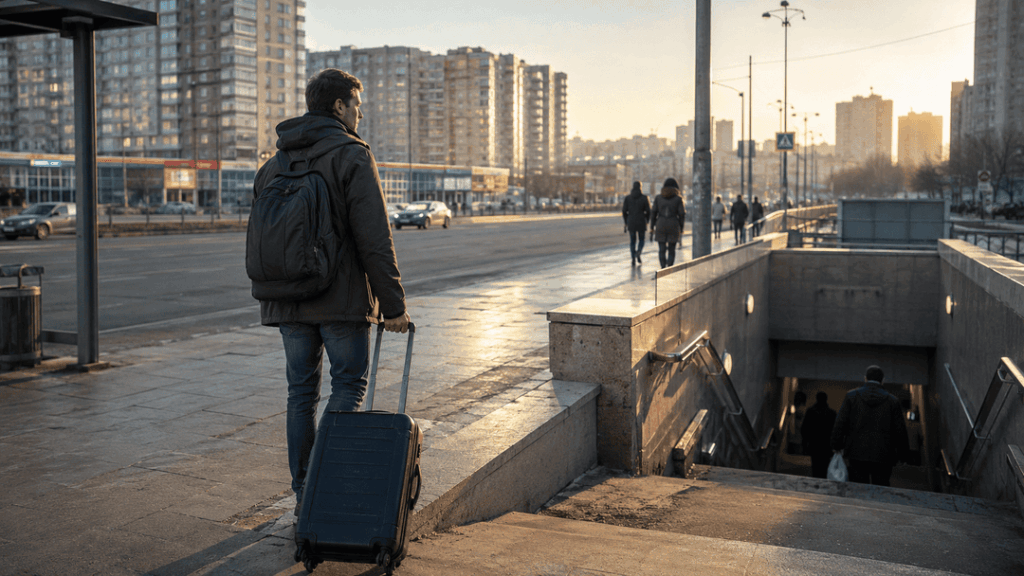
When you enter Russia, you will normally receive a migration card. This is one of the first important documents you must protect. Russian consular guidance explains that migration card forms are issued to foreign citizens on entry, free of charge, by border control officials or representatives of transport organizations.
Do not treat this card as a casual arrival slip. It may be needed for migration registration, visa matters, hotel check-in, residence steps, and other formalities. Keep it with your passport, and make digital copies of both sides after arrival.
The migration card is not the same thing as migration registration. The card records your entry. Registration records where you are staying in Russia. This difference is important because many newcomers confuse the two.
2. Your First Address: Hotel, Rental Apartment, or Host Registration
After arrival, one of the first practical issues is migration registration at your place of stay. In simple terms, the Russian authorities need to know where a foreign citizen is staying.
For many short-term arrivals, a hotel handles this automatically. If you stay in a private apartment, the host, landlord, inviting party, or responsible organization may need to help with the registration process. Several migration guides and university instructions describe this as registration at the place of stay, with submission deadlines tied to the date of arrival and the type of stay.
This is one of the first places where Western expectations can clash with Russian reality. In many Western countries, renting a place is mainly a private transaction. In Russia, your address can become part of your legal migration status. Some landlords are comfortable registering foreigners; others are not. This should be discussed before you rent.
A practical rule: before paying for an apartment, ask clearly whether the landlord can provide migration registration. Do not assume.
3. Apartment Hunting: It May Be Easier and Harder Than Expected
Russia has many modern apartments, especially in major cities like Moscow, Saint Petersburg, Kazan, Sochi, Yekaterinburg, and Novosibirsk. Many buildings are clean, secure, and located near excellent public transportation. You may find that Russian cities are more convenient than expected, especially if you are near a metro line.
However, apartment hunting can still be stressful for a foreigner.
You may face:
- Landlords who prefer Russian citizens.
- Requests for passport copies and visa/migration documents.
- A deposit plus first month’s rent.
- Uncertainty over whether registration will be provided.
- Language barriers during contract discussions.
- Confusion over utilities, meters, internet setup, and building access.
The solution is not panic; it is preparation. Make sure you understand what is included in the rent, whether the apartment owner is the actual legal owner, whether registration is possible, and how payments are documented.
This is also where local help can save time. For people who want practical relocation support, RussiaExpats.com services can help foreigners understand the moving process and avoid common first-month mistakes.
4. SIM Cards Are No Longer a Simple Airport Purchase
A few years ago, buying a Russian SIM card was relatively easy. That has changed. Since 2025, SIM registration requirements for foreign citizens have become more formal. HSE University notes that from January 1, 2025, foreign citizens are required to undergo biometric registration to obtain SIM cards.
In practice, this means a newcomer may need more than just a passport. Depending on the operator and your status, the process may involve a notarized passport translation, SNILS, Gosuslugi access, biometric verification, and in-person identity checks. Practical 2026 SIM guides also describe the need for SNILS, a verified Gosuslugi account, biometric data, and device IMEI information.
This can surprise Westerners because a phone number is often needed for everything else: banking, delivery apps, government services, messaging, apartment access, and online accounts.
For your first days, consider having an international roaming plan or eSIM as a bridge. Do not arrive assuming you can instantly buy a local SIM in five minutes.
5. Banking: Useful, but Not Always the First Step
A Russian bank account can make daily life much easier. Local cards are useful for groceries, taxis, online shopping, delivery apps, pharmacies, cafés, and domestic services. But opening an account as a foreigner may not be the first thing you can do.
Current practical guidance for foreigners notes that banks may require a complex document package, including passport, translation, proof of legal status, registration, SNILS, TIN, Russian phone number, and sometimes other documents. Banks also apply their own internal risk rules.
This means the order matters. Many foreigners need to handle legal stay, translation, registration, SNILS or other identity steps, SIM access, and biometric requirements before banking becomes realistic.
Do not be offended if the bank process feels slower or more formal than expected. Russian banks are technologically advanced once you are inside the system, but getting into the system as a foreigner can take patience.
6. Medical Examination, Fingerprints, and Photographing
For longer stays, many foreign citizens must complete a medical examination, fingerprint registration, and photographing. The exact deadlines depend on your purpose of stay.
University and migration guidance commonly explains that foreign citizens arriving for work may need to complete the procedures within 30 calendar days, while those arriving for non-work purposes for more than 90 days may need to complete them within 90 calendar days from entry.
RANEPA also states that foreign nationals, with certain exceptions, are subject to mandatory medical examination, state fingerprint registration, and photographing under Federal Law No. 274-FZ dated July 1, 2021.
The medical exam may include checks for infectious diseases and other required screenings. The procedure is not something to leave until the last minute. You may need appointments, approved medical centers, translations, receipts, and later submission of results.
The good news: once you understand the steps, it is manageable. The mistake is treating it casually or waiting until the deadline is close.
7. Document Translations: Expect to Need Them
Westerners often underestimate how often they may need a notarized Russian translation of their passport. It can come up for banking, SIM cards, SNILS, medical procedures, contracts, official appointments, and other administrative steps.
Get this done early through a reputable translation office. Keep several copies if possible. In Russia, having the right paper at the right time can turn a stressful day into a simple appointment.
A practical first-week folder should include:
- Passport.
- Visa, if applicable.
- Migration card.
- Migration registration slip.
- Notarized passport translation.
- Rental agreement or address confirmation.
- Medical/fingerprint documents, once completed.
- Copies and scans of everything.
Russia rewards organized people.
8. Daily Life: More Convenient Than Many Westerners Expect
Once the paperwork pressure begins to settle, many Westerners are pleasantly surprised by everyday life in Russia.
Large Russian cities often have excellent metro systems, reliable taxis, fast delivery services, strong café culture, clean public spaces, good parks, and a serious attitude toward public infrastructure. Many services are app-based, and Russian domestic platforms are often efficient.
You may also notice practical cultural differences:
- People may not smile at strangers as much, but this does not mean they are unfriendly.
- Customer service can be direct rather than emotionally warm.
- Rules may be enforced more formally.
- Personal relationships matter, but they take time.
- Russians often respect competence, seriousness, and sincerity.
- Once people accept you, hospitality can be very genuine.
Russia is not trying to be the West. That is part of its appeal. The sooner you stop expecting everything to work like home, the sooner you can appreciate the country on its own terms.
9. Language: Your First 90 Days Will Be Much Easier With Survival Russian
You do not need fluent Russian on day one, but you do need humility. English is available in some hotels, tourist areas, and international businesses, but it is not something you should rely on for daily life.
In your first 90 days, learn practical phrases for:
- Asking where to go.
- Showing documents.
- Saying you do not understand.
- Asking someone to speak more slowly.
- Confirming your address.
- Visiting a pharmacy.
- Talking to building security.
- Handling taxi and delivery issues.
- Asking about payment, receipts, and appointments.
Even basic Russian changes how people respond to you. It shows respect. It also helps you feel less helpless.
10. Timeframes: The First 90 Days Are Not One Big Vacation

The first 90 days usually have phases.
Days 1–7: Arrival, migration card, temporary place to stay, first registration issue, basic orientation, phone/internet workaround, grocery stores, transport cards, and document copies.
Weeks 2–4: Apartment search, landlord discussions, registration follow-up, passport translation, SIM process, early banking attempts, local apps, and learning the neighborhood.
Month 2: Medical exam and fingerprint planning if required, more stable housing, better daily routines, language lessons, local contacts, and adjusting to Russian systems.
Month 3: Administrative cleanup, deadline checks, longer-term visa or residence planning, stronger routines, and more confidence navigating the city.
This period can feel intense, but it is also when Russia starts to become real rather than theoretical.
11. What Westerners Often Get Wrong
Many problems come from wrong assumptions.
Some newcomers assume Russia is chaotic. In reality, many systems are strict and procedural. Others assume every rule will be explained in English. It will not. Some assume that a friendly landlord automatically understands migration responsibilities. Maybe, maybe not. Some assume that because they have money, everything will be easy. Not necessarily.
Russia is not impossible. It is process-driven. If you respect the process, keep documents organized, and get reliable guidance, life becomes much easier.
12. What Makes Russia Worth the Effort
The first 90 days can be bureaucratic, but they can also be deeply rewarding. Many Westerners come to appreciate Russia’s seriousness, cultural depth, family orientation, strong education traditions, beautiful cities, seasonal atmosphere, and sense of history.
There is also a feeling many foreigners notice but struggle to describe: Russia feels like a real civilization, not just a place to consume services. The language, literature, churches, museums, apartment courtyards, winter streets, long train routes, and intense conversations all remind you that you are entering a country with its own rhythm and identity.
That does not erase the paperwork. It simply puts it in perspective.
Final Advice: Be Prepared, Be Patient, and Do Things in the Right Order
Your first 90 days in Russia will likely involve a migration card, address registration, apartment paperwork, SIM card complications, possible bank account delays, medical examination, fingerprinting, document translations, and a lot of learning by doing.
The best approach is simple:
Arrive legally. Protect your documents. Register your address properly. Get translations early. Confirm your deadlines. Do not wait on medical or fingerprint requirements. Expect SIM and banking steps to take effort. Learn survival Russian. Keep copies of everything.
Most of all, come with the right attitude. Russia is not a country that reveals itself instantly. It rewards seriousness, patience, respect, and persistence.
For Westerners who want help navigating these first steps instead of figuring out every detail alone, RussiaExpats.com can provide relocation guidance and practical support for settling into life in Russia.
The first 90 days may not always be easy, but they are manageable. And for the right person, they can be the beginning of a very meaningful new chapter.