Moving to Russia is not a small lifestyle change. It is a decision that touches nearly every part of daily life: climate, language, family routines, work, housing, culture, transportation, social expectations, and long-term plans. For the right person, Russia can offer a deeply rewarding life: beautiful cities, rich traditions, strong family culture, serious education, excellent public transport in major cities, impressive architecture, and access to both modern urban life and vast natural landscapes.
But Russia is also a country that rewards preparation. It is not the best fit for someone who wants everything to feel familiar from the first week. It is better suited to people who are adaptable, patient, practical, and genuinely interested in living in a different cultural environment.
This guide will help you decide whether moving to Russia is right for you.
Start With Your Reason for Moving

The first question is simple: why Russia?
People consider Russia for many reasons. Some are married to a Russian citizen or have family roots there. Some are drawn to Russian culture, Orthodox tradition, classical music, literature, language, history, and architecture. Others are looking for a slower, more family-centered life outside the usual Western expat destinations. Some want a serious educational environment for their children. Others are retirees looking for a meaningful new chapter.
Your reason matters because it will shape your expectations. A person moving for marriage will have different priorities than a young couple looking for opportunity, a family with school-age children, or a retired couple seeking stability and routine.
Russia is not a “try it casually and figure it out later” destination for most foreigners. It is much easier when you have a clear purpose, a realistic plan, and a willingness to learn how the country works.
Understand That Russia Is Large and Regional
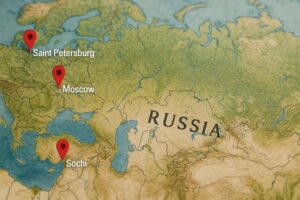
Russia is the largest country in the world by land area, stretching across Eastern Europe and northern Asia. That size matters because life can feel very different depending on where you settle. Moscow and Saint Petersburg are large, international, culturally rich cities with strong infrastructure, major universities, museums, restaurants, transport systems, and many services. Regional cities such as Kazan, Yekaterinburg, Nizhny Novgorod, Novosibirsk, Krasnodar, and Tyumen can offer a different rhythm of life, often with lower costs and a more local atmosphere.
Climate also varies widely. Winters in Moscow are real winters, but they are not the same as winters in Siberia or the far north. Southern regions can feel much milder. Before moving, think carefully about whether you prefer a major city, a quieter regional center, or a more rural lifestyle.
This is one of the most important decisions you will make. Many foreigners focus only on “moving to Russia,” but the better question is: which Russia fits your life?
Decide Whether You Can Adapt to the Language
You do not need perfect Russian to begin life in Russia, but you do need humility about the language barrier. English is more common in major cities, among younger people, in some professional environments, and in international services. Still, Russian is the language of daily life.
You will encounter Russian when renting an apartment, reading signs, visiting offices, ordering food, dealing with documents, using local apps, communicating with neighbors, and handling everyday routines. Translation apps help, but they do not replace basic language ability.
If you are serious about moving, start learning Russian early. You do not need to become fluent before arrival, but you should learn the alphabet, basic greetings, numbers, directions, food vocabulary, and common phrases for appointments and errands.
A good test is this: are you excited by the idea of learning Russian, or do you feel annoyed that you may have to? If the idea of learning the language feels impossible or irritating, Russia may be difficult for you long term. If it feels challenging but interesting, that is a good sign.
Think About Family Life and Social Values
Russia can be attractive for families because daily life often places high value on children, education, grandparents, tradition, and structured routines. Many Russian families take schooling seriously. Cultural activities such as music, dance, sports, art, and language study are common for children.
For families moving with children, the biggest questions are practical: school choice, language support, neighborhood, commute, activities, and how quickly the children can adjust. Younger children often adapt faster than adults, especially with language. Teenagers may need more emotional preparation because they are leaving friends, familiar school systems, and social routines behind.
For a young couple, Russia can be an exciting place to build a shared life if both partners are aligned. If one person is enthusiastic and the other is only tolerating the idea, the move can create tension. Both people should understand what daily life may require.
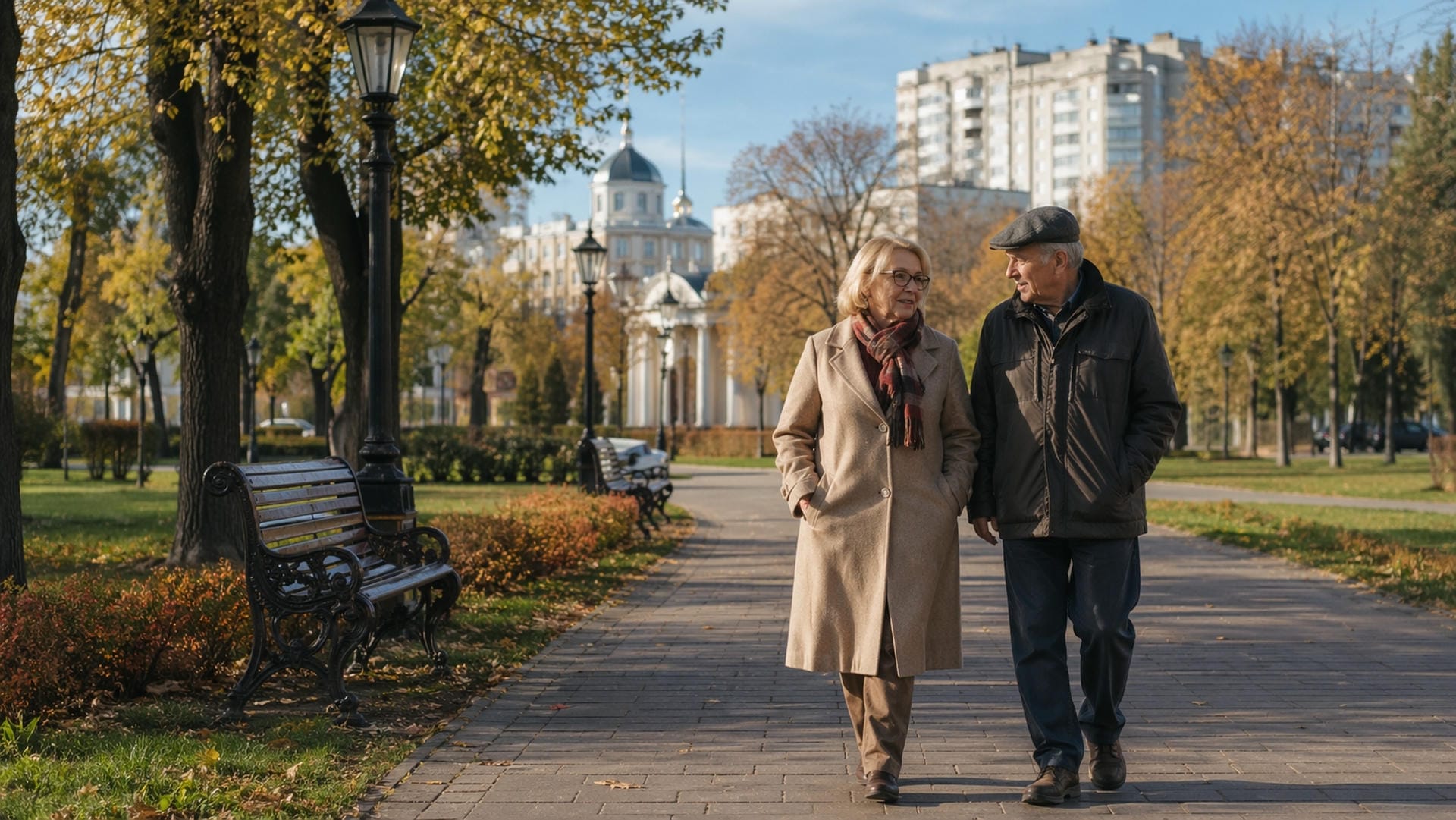
For a retired couple, the decision may center more on climate, medical access, housing comfort, walkability, transport, community, and proximity to family or trusted local help.
Evaluate Your Work and Income Situation
Your work situation is one of the biggest factors in deciding whether Russia is right for you.
Some foreigners move because they have a job offer, a Russian spouse, business interests, remote work, academic plans, or retirement income. Others want to explore options after arrival. The first group usually has an easier transition because their legal and financial structure is clearer from the beginning.
If you plan to work locally, you need to understand what type of permission, visa, or residence status applies to your situation. Russia has several entry and stay categories, and the correct route depends on nationality, purpose of stay, family status, employment situation, and long-term goals.
Visit Before You Move Permanently
If possible, visit Russia before making a permanent decision. A visit gives you information that articles and videos cannot provide.
Spend time in ordinary neighborhoods, not only tourist areas. Ride the metro or buses. Visit grocery stores. Walk through residential areas. Look at apartment buildings. Pay attention to how people interact in public. Try simple errands. Notice how you feel after several days of hearing Russian all around you.
A good exploratory visit should answer several questions:
Can you imagine living here during normal weekdays?
Do you like the pace of life?
Can you handle the weather?
Do you feel curious rather than overwhelmed?
Do you enjoy the culture beyond the tourist attractions?
Do you feel comfortable navigating daily tasks with limited Russian?
Russia often becomes more appealing the more you understand it. Many foreigners are surprised by how clean, organized, and culturally rich major Russian cities can be. But the key is to experience the country as a potential resident, not only as a visitor.
Consider the Climate Honestly
Russia’s climate is part of the lifestyle. Winter is not a minor detail. In many regions, the cold season shapes clothing, transportation, routines, heating, outdoor activities, and mood.
Some people love real winter. They enjoy snow, warm apartments, winter walks, seasonal traditions, and the rhythm of changing seasons. Others struggle with shorter daylight, icy sidewalks, heavy coats, and long cold months.
Before moving, think about your physical and emotional response to winter. Do not romanticize it and do not exaggerate it. Russia is well adapted to winter life: buildings are heated, people dress properly, public transport keeps moving, and daily life continues. But you need the right expectations.
If winter worries you, consider milder regions or plan an extended winter visit before making a final decision.
Look at Housing Expectations
Housing in Russia can be very comfortable, but it may differ from what you are used to. Apartment living is common, especially in cities. Many people live in high-rise residential buildings with courtyards, playgrounds, shops nearby, and access to public transport.
When evaluating housing, think beyond the apartment itself. The neighborhood matters. Commute matters. Nearby grocery stores, clinics, schools, parks, and transport stops matter. Elevator condition, building maintenance, heating, noise levels, and internet availability can all affect quality of life.
Foreigners should also be prepared for a more document-heavy rental process than they may expect. This is where local help can make a major difference, especially if you do not speak Russian well.
A practical approach is to rent first, learn the city, and only later make larger long-term decisions.
Decide Whether You Like Structured Daily Life
Russia is often appreciated by foreigners who like order, seriousness, culture, education, and clear expectations. In many areas of life, Russia can feel more formal than some Western countries. Documents matter. Appointments matter. Rules and procedures matter. People may not always smile casually in public, but relationships can become warm and loyal once trust develops.
This cultural difference is important. Some newcomers misread Russian reserve as coldness. In reality, public behavior and private friendship are different. Russians may be direct, practical, and reserved with strangers, but generous and deeply committed to family and close friends.
If you need constant casual friendliness from strangers, Russia may take adjustment. If you value sincerity over small talk, you may find Russian social culture refreshing.
Think About Transportation and Mobility
One of Russia’s advantages, especially in major cities, is public transportation. Moscow is known for its metro system, and many cities have useful bus, tram, trolleybus, taxi, and rail connections. For people coming from car-dependent areas, this can be a major quality-of-life improvement.
Good transport affects daily life more than many people realize. It changes where you can live, how easily children can attend activities, how often you can meet friends, and whether you need a car.
Before choosing a city or neighborhood, study commute times. A beautiful apartment is less attractive if it makes every daily trip difficult. A simpler apartment near good transport may produce a better lifestyle.
Ask Whether You Are Ready for Administrative Details
Relocating to Russia involves paperwork. That may include visas, invitations, migration registration, translations, notarized documents, residence options, rental paperwork, school records, medical documents, employment documents, and other formal steps depending on your situation.
For example, Russia’s official e-visa FAQ states that migration registration is mandatory for foreign citizens entering under visa or visa-free procedures, and the notification of arrival is generally submitted within seven working days unless handled by a hotel.
This does not mean the process is impossible. It means you should not improvise. Russia rewards people who prepare documents carefully and follow procedures correctly.
This is also the best place to get help: RussiaExpats.com can assist foreigners with the practical logistics of moving to Russia, including planning, relocation steps, housing support, document navigation, and everyday settlement guidance so the transition feels smoother and less overwhelming.
Decide Whether You Want to Integrate
The happiest long-term foreigners in Russia usually do not live only in an expat bubble. They learn some Russian, make local friends, understand holidays, try regional foods, learn public etiquette, and become interested in the country beyond stereotypes.
Integration does not mean losing your identity. It means respecting the place you are moving to.
Learn basic customs. Bring flowers in odd numbers for celebrations. Remove shoes when entering many homes. Dress neatly for formal appointments. Be punctual. Understand that direct communication is common. Appreciate hospitality when it is offered.
Russia is not a country that reveals itself fully in a week. It opens gradually. People who are patient often discover a deeper, richer experience than they expected.
Match Russia to Your Stage of Life
Different people should evaluate Russia differently.
A young single person may focus on language learning, career options, social life, and city energy.
A young couple may focus on housing, family planning, work flexibility, and whether both partners are equally committed.
A family should focus on schools, neighborhoods, activities, language support, and long-term stability.
A retired couple should focus on climate, comfort, healthcare access, walkability, community, and having reliable local support.
A remote worker should focus on legal status, internet reliability, time zones, housing comfort, and whether daily life supports productivity.
There is no single answer. Russia may be excellent for one person and wrong for another. The goal is not to decide whether Russia is “good” in the abstract. The goal is to decide whether Russia fits your life.
Signs Russia May Be Right for You
Russia may be a strong fit if you:
- Value family, tradition, culture, and serious education.
- Are willing to learn Russian.
- Prefer depth over constant casual friendliness.
- Can handle real seasons, including winter.
- Want access to major cities with strong public transport.
- Are interested in history, architecture, literature, music, and cultural life.
- Can be patient with documents and procedures.
- Are adaptable when things work differently than you are used to.
- Have a clear reason for moving.
- These are good signs because they match the reality of life in Russia.
Signs You Should Slow Down
You may need more time before moving if you dislike paperwork, refuse to learn any Russian, expect everything to work like your home country, have no clear income plan, or have never visited Russia before.
That does not mean you should abandon the idea. It may simply mean you need a research trip, language lessons, professional relocation guidance, or a more realistic timeline.
Moving countries is not only about desire. It is about readiness.
Final Decision: Visit, Prepare, Then Commit
Russia can be a wonderful place to live for people who understand what they are choosing. It offers beauty, culture, strong traditions, impressive cities, serious education, and a lifestyle that many foreigners find more grounded and meaningful than they expected.
But the best moves are planned moves. Visit first if possible. Choose the right city. Learn basic Russian. Understand your legal path. Think honestly about climate, family needs, work, housing, and long-term goals.
The question is not simply, “Should I move to Russia?”
The better question is: Can I see myself building a real life there, not just visiting?
If the answer is yes, and you are prepared to approach the move seriously, Russia may be the right next chapter.