Russia has one of the most practical transport systems in the world for daily life. In major cities, the metro is fast, clean, frequent, and inexpensive. Buses, trams, trolleybuses, suburban trains, taxis, and long-distance rail routes make it possible to live without a car in many parts of the country. For foreigners, the main challenge is not the quality of transportation, but understanding how payment, apps, language, routes, and ticket rules work.
This guide explains how to use taxis, trains, and public transport in Russia with confidence, whether you are visiting Moscow, settling in Saint Petersburg, moving to a regional city, or planning longer trips across the country.
Public Transport in Russia: What to Expect
Public transport in Russia is generally reliable, especially in large cities. Moscow and Saint Petersburg have extensive metro networks, while cities such as Kazan, Nizhny Novgorod, Novosibirsk, Samara, and Yekaterinburg also have metro, tram, bus, or trolleybus systems depending on the city.
In Moscow, the Troika card is the main transport card and can be used across the metro, Moscow Central Circle, Moscow Central Diameters, buses, trams, and other city transport. It can be bought at metro ticket offices, MCC stations, suburban railway stations, and Mosgortrans ticket machines, with a refundable deposit listed by Moscow Transport.
Saint Petersburg has a similar rechargeable card called Podorozhnik, which is used for the metro, buses, trams, and trolleybuses. The Saint Petersburg Metro also provides official information for recharging the Podorozhnik single e-ticket.
For most foreigners, the best approach is simple: use the metro when available, use buses or trams for shorter local routes, use taxi apps late at night or with luggage, and use Russian Railways for longer city-to-city travel.
How to Use the Metro in Russia
The metro is usually the easiest public transport system for foreigners. Moscow and Saint Petersburg are the two most important metro cities, but other Russian cities also have metro systems.
In Moscow, the metro is deep, fast, and well connected. Stations are clearly marked, trains are frequent, and most central areas are easy to reach without a car. Moscow’s system also connects with the Moscow Central Circle and Moscow Central Diameters, which function like urban rail lines integrated into the wider transport network.
To use the metro:
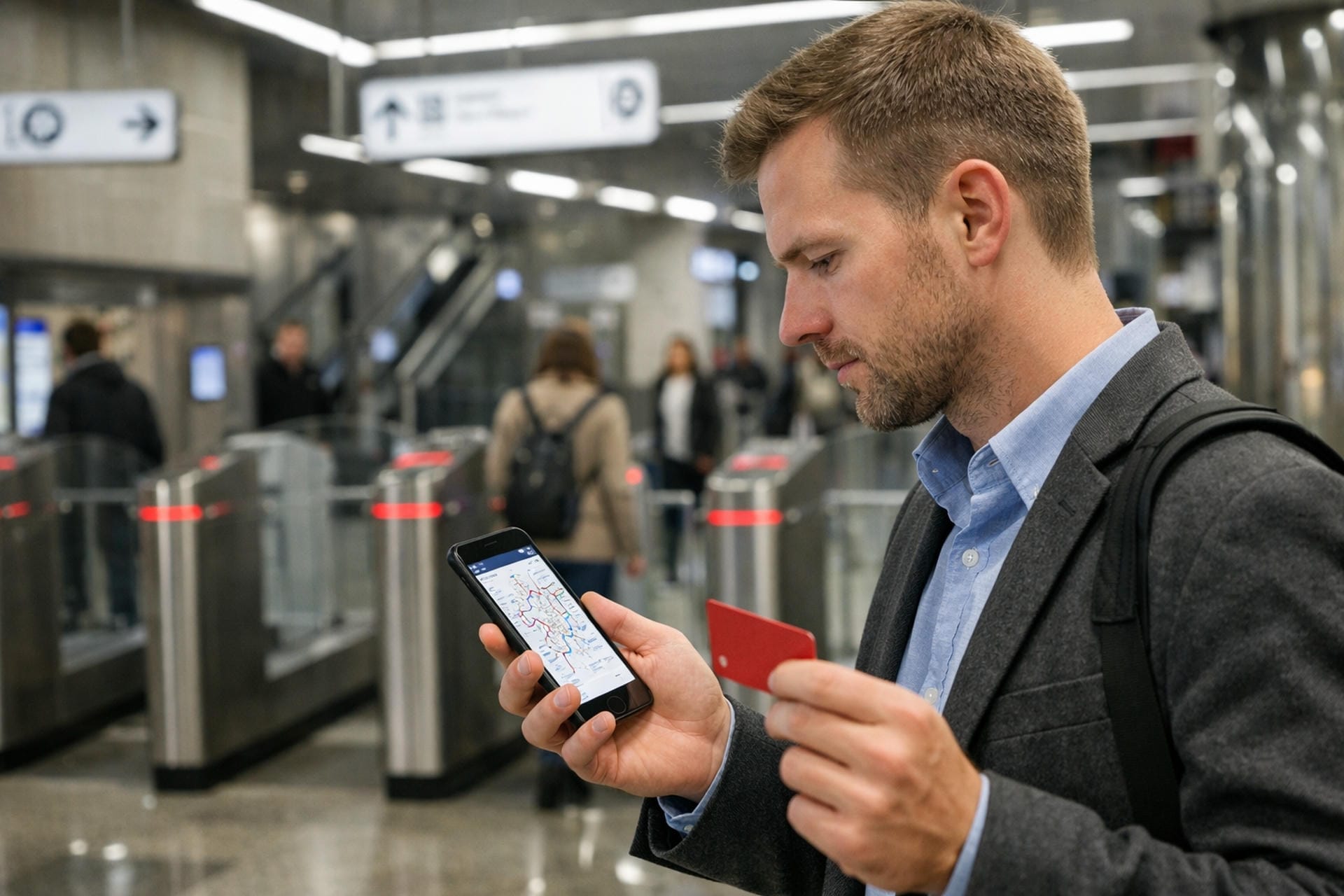
- Enter the station and follow signs to the ticket machines or turnstiles.
- Pay with a transport card, ticket, or accepted bank card.
- Tap your card or ticket at the turnstile.
- Follow the colored line signs to your platform.
- Check the direction of travel by looking at the final station on the line.
- Exit through marked exits, usually numbered and connected to streets, landmarks, or shopping centers.
In Moscow, the Troika card is usually the most convenient option for residents and longer-stay visitors. Moscow Transport states that the card can be purchased at metro and MCC cash desks, suburban train stations, and Mosgortrans ticket machines.
In Saint Petersburg, metro stations are often very deep, so allow extra time for long escalators. The system is smaller than Moscow’s but very useful for reaching central neighborhoods and outer districts. Podorozhnik works as the local transport card and can be topped up for repeated use.
Buying and Using a Transport Card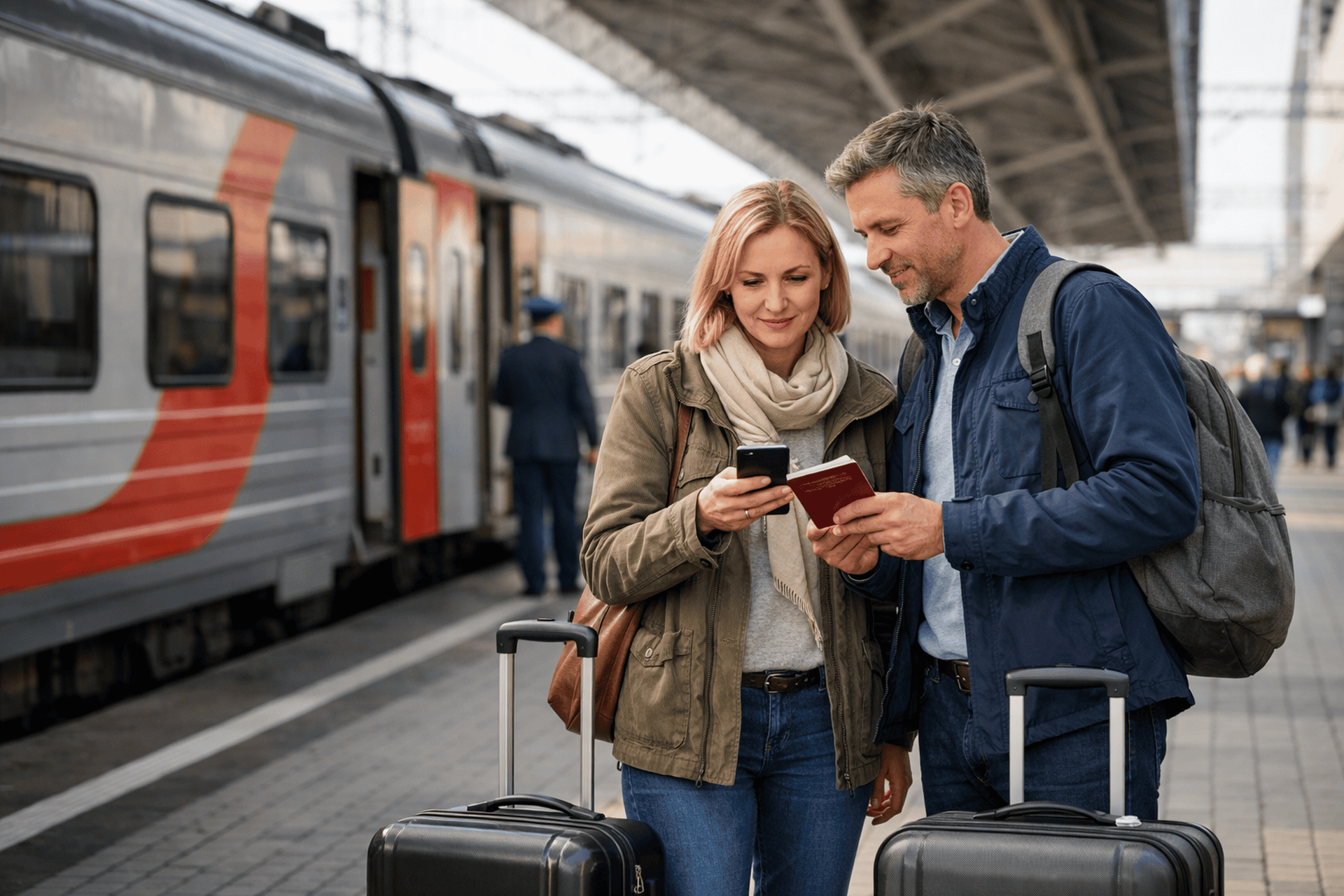
A transport card saves time and avoids the need to buy a ticket before every ride.
In Moscow, ask for a Troika card. In Russian, it is written as Тройка. You can load money onto the card and use it for single rides or certain passes. Moscow Transport notes that the Troika card has a refundable deposit if the undamaged card is returned in working condition.
In Saint Petersburg, ask for Podorozhnik. In Russian, it is written as Подорожник. It works in a similar way: top it up, tap it at the metro gate or surface transport validator, and the fare is deducted.
For foreigners, transport cards are especially useful because they reduce the need to explain your destination, handle cash repeatedly, or understand every fare option immediately. Once the card is loaded, using public transport becomes much easier.
A practical phrase to know:
“Можно карту Тройка?”
“Can I have a Troika card?”
For Saint Petersburg:
“Можно карту Подорожник?”
“Can I have a Podorozhnik card?”
Payment Issues Foreigners Should Know
Payment is one of the most important issues for foreigners in Russia. Due to international banking restrictions, foreign Visa, Mastercard, and many other foreign-issued cards may not work inside Russia. Many visitors and new residents rely on cash, a Russian bank card, or a local MIR card once they are able to open one. For transport, this means you should bring enough rubles or exchange money at a proper bank or exchange office. Once in Russia, consider opening a local bank account if you are staying long term and legally eligible. A local card makes taxi apps, train tickets, delivery services, and online payments much easier.
For short visits, cash plus transport cards are usually enough for public transport. For taxis and online train bookings, local payment access can be more important.
How to Use Buses, Trams, and Trolleybuses
Buses, trams, and trolleybuses are common in Russian cities. They are useful for routes not covered by the metro and for neighborhoods outside central areas.
In Moscow and Saint Petersburg, surface transport usually uses electronic validators. You enter the vehicle, tap your card or ticket, and keep your receipt or card available in case of inspection. Some older systems or regional cities may still use conductors, cash payment, or paper tickets.
Route numbers are displayed on the front, side, and sometimes back of the vehicle. Stops may be announced in Russian, and newer vehicles may have screens showing the next stop. In major cities, route apps are very helpful because they show arrival times and stops on a map.
Use buses and trams when:
- the metro does not go near your destination;
- you are traveling a short distance;
- you want to avoid changing metro lines;
- you are in a smaller city without a metro;
- you are traveling through residential districts.
One thing to understand is that traffic can affect buses and taxis, especially in Moscow and other large cities. The metro is often faster during rush hour.
Transport Apps in Russia
Transport apps make life much easier, especially if you do not read Russian fluently. Yandex Maps is widely used for routes, public transport schedules, traffic, walking directions, and estimated travel times. It is one of the most useful apps for foreigners living in Russia.
For taxis, Yandex Go is the main ride-hailing app in many Russian cities. The app allows users to choose ride classes such as Economy, Comfort, Comfort+, Minivan, and other options depending on the city and availability.
Yandex’s taxi support information states that users can pay by cash or card, and that the payment method can be selected before ordering a ride or during the order process. For foreigners without a working Russian card, cash payment can be very useful, although availability may vary by location and driver.
Helpful apps to consider:
Yandex Maps — routes, traffic, walking directions, public transport.
Yandex Go — taxis, delivery, scooters in some cities.
Moscow Metro / Moscow Transport apps — useful for Moscow routes and Troika-related services.
RZD Passengers app or RZD website — long-distance trains, schedules, and tickets.
Aeroexpress app or website — Moscow airport train tickets.
How to Use Taxis in Russia
Taxis in Russia are best ordered through apps. Avoid random drivers offering rides at airports, train stations, tourist sites, or nightlife areas. App-based taxis show the estimated price, route, car, driver, and license plate before the ride starts.
To order a taxi:
- Open Yandex Go or another local taxi app.
- Enter your destination.
- Check the pickup point carefully.
- Select the ride class.
- Choose cash or card, depending on your payment options.
- Confirm the ride.
- Match the license plate before entering the car.
- Follow the route in the app.
Taxi classes vary, but common options include Economy, Comfort, Comfort+, Business, and Minivan. Economy is fine for normal rides. Comfort or Comfort+ is better if you have luggage, are traveling after a long flight, or want a newer vehicle.
For airport pickups, be careful with pickup zones. Large airports and train stations may have several entrances, lanes, or terminals. It is often better to choose a clear pickup point and stay there until the driver arrives.
Useful taxi phrases:
“Я здесь.” — “I am here.”
“Я у входа.” — “I am at the entrance.”
“Можно оплатить наличными?” — “Can I pay in cash?”
“Пожалуйста, остановите здесь.” — “Please stop here.”
Airport Transfers in Moscow
Moscow has several major airports, including Sheremetyevo, Domodedovo, and Vnukovo. Taxis are convenient, especially with luggage, but rail transfers can be more predictable during traffic.
Aeroexpress provides rail and express bus connections to Moscow airports. The official Aeroexpress site lists routes including Sheremetyevo Airport to Belorussky Railway Station and Odintsovo, Domodedovo Airport to Paveletsky Railway Station, and Vnukovo Airport to Kievsky Railway Station.
Aeroexpress is useful when:
- you want to avoid traffic;
- you are traveling during rush hour;
- your destination is near a connected railway or metro station;
- you are comfortable transferring from train to metro or taxi.
A taxi may be better when:
- you have heavy luggage;
- you are traveling with children;
- you arrive late at night;
- your accommodation is far from the train terminal;
- you do not yet understand the metro system.
Long-Distance Trains in Russia
Russia’s long-distance rail system is extensive and important. Trains connect Moscow, Saint Petersburg, Kazan, Sochi, Nizhny Novgorod, Yekaterinburg, Novosibirsk, Vladivostok, and many other cities.
Russian Railways, commonly known as RZD, operates the national rail system. Tickets can be bought online, through the RZD app, at train stations, or through approved agencies. For foreigners, the key rule is that your ticket information must match your passport. RZD’s English FAQ lists a foreign citizen’s passport as an accepted document for booking electronic tickets.
When boarding, you normally need the passport used to buy the ticket. RZD’s passenger information explains that boarding rules are tied to the identity document used for issuing the ticket. This is especially important for foreigners because a mistake in name spelling, passport number, or document type can create problems at boarding.
Train Classes: What to Choose
Russian long-distance trains offer several types of seating and sleeping arrangements. The exact options depend on the train.
Common categories include:
Sitting cars — for shorter routes.
Platskart — open-plan sleeper carriage with bunks; cheaper but less private.
Kupe — four-berth compartment; more comfortable and private.
SV — two-berth compartment; more expensive and more comfortable.
High-speed trains — such as routes between Moscow and Saint Petersburg, where seating is similar to European intercity rail.
For foreigners traveling overnight, kupe is usually the best balance of price, comfort, and privacy. Platskart can be economical and social, but it may feel less comfortable if you are traveling with valuables, large luggage, or limited Russian language skills.
For daytime city-to-city travel, high-speed trains are often the easiest option. Between Moscow and Saint Petersburg, rail is usually more convenient than flying because you travel from city center to city center and avoid airport transfers.
Buying Russian Train Tickets
When buying a train ticket, pay attention to:
- exact passport spelling;
- passport number;
- departure station;
- arrival station;
- train number;
- carriage number;
- seat or berth number;
- local departure time;
- baggage rules;
- whether electronic registration is included.
Some Russian cities have multiple railway stations. Moscow, for example, has several major stations serving different directions. Do not assume “Moscow station” means one central railway station. Always check the exact station name.
Arrive early, especially if you are new to the system. Large stations can be confusing, and security screening at entrances may take extra time. Long-distance trains usually board before departure, but you should not arrive at the last minute.
Suburban Trains and Regional Travel
Suburban trains are called elektrichki. They connect large cities with nearby towns, suburbs, dacha areas, and regional destinations. In Moscow, suburban rail is increasingly integrated with the wider city transport network through the Moscow Central Diameters. In other regions, suburban trains may be more basic but still useful.
Elektrichki are good for:
- day trips;
- commuting from suburbs;
- visiting nearby towns;
- cheaper regional travel;
- avoiding road traffic.
Tickets are usually bought at station machines, ticket windows, or apps depending on the region. Keep your ticket until you exit, because some stations require it at exit gates.
Safety and Practical Etiquette
Russia’s public transport is generally orderly, but foreigners should follow basic city safety rules.
Keep your phone, wallet, and passport secure. Avoid displaying large amounts of cash. Be careful in crowded stations, escalators, and tourist-heavy areas. Use official taxis through apps rather than negotiating with random drivers.
On escalators, stand on the right and walk on the left where this custom is followed. Let passengers exit before entering trains. Offer seats to elderly passengers, pregnant women, people with disabilities, and adults with small children. Keep your voice moderate, especially on the metro.
In winter, allow more time. Snow, ice, heavy coats, and slippery sidewalks can slow down your journey. Metro systems continue to function well in winter, but walking to and from stations may take longer.
Language Tips for Transport
Even if you do not speak Russian well, learning a few words helps.
Метро — metro
Автобус — bus
Трамвай — tram
Троллейбус — trolleybus
Такси — taxi
Вокзал — railway station
Аэропорт — airport
Билет — ticket
Карта — card
Остановка — stop
Выход — exit
Вход — entrance
Наличные — cash
Карта не работает — the card does not work
A helpful phrase:
“Я не говорю хорошо по-русски.”
“I do not speak Russian well.”
Another useful phrase:
“Покажите, пожалуйста, где выход.”
“Please show me where the exit is.”
Common Mistakes Foreigners Make
The most common mistake is relying only on a foreign bank card. Bring cash, prepare a backup payment method, and consider a local card if staying longer.
Another mistake is using taxis from unofficial drivers at airports or train stations. Use an app whenever possible.
Foreigners also sometimes confuse railway stations. In Moscow and Saint Petersburg, confirm the exact station name before departure.
A fourth mistake is underestimating distances. Russian cities can be large, and a destination that looks close on a map may take longer than expected because of rivers, highways, railway lines, or limited pedestrian crossings.
Finally, some foreigners forget that public transport signs may be partly or mostly in Russian outside tourist centers. Save your destination in Russian, take screenshots, and keep your phone charged.
How RussiaExpats.com Can Help
For many foreigners, transportation is one part of a larger relocation puzzle. Finding an apartment, registering legally, setting up payments, choosing the right neighborhood, understanding documents, and learning how to move around the city all connect together.
RussiaExpats.com can help make the process smoother by guiding foreigners through practical steps before and after arrival. Instead of trying to figure out transport, housing, local services, and Russian-language details alone, newcomers can get support from people who understand both the foreigner’s perspective and the realities of daily life in Russia.
This is especially useful during the first weeks, when simple tasks such as getting from the airport, buying a SIM card, reaching an apartment, paying for transport, or booking a train can feel complicated without local knowledge.
Final Advice
Public transport in Russia is one of the strongest parts of daily life. The metro is efficient, taxis are easy with apps, trains are excellent for long-distance travel, and transport cards make daily movement simple once you understand the system.
For foreigners, the key is preparation. Set up useful apps, carry cash, learn the name of your local transport card, check exact train stations, and keep your passport details consistent when booking rail tickets. Once these basics are in place, getting around Russia becomes much easier, more affordable, and more comfortable.
Russia is a large country, but its transport systems are practical and well developed. With a little preparation, you can move around confidently from your first airport transfer to your first overnight train journey.